


February 1st was either an exciting day or a tearful one for Harvard Business School (HBS) Round 2 (R2) applicants: the school’s MBA Admissions Board notified candidates whether they were invited to interview or had merited “early release.” Euphemistic though it sounds, early release should really be viewed by R2 applicants as the blessing that…
Harvard Business School
Scroll down for HBS admissions tips, info, and news.
M7 MBA Programs: Everything You Need to Know in 2024
Talk about diversity! The M7 business schools represent seven distinct, vivid cultures – each with its own history, values, characteristics, opportunities, and challenges. Of course, there are many commonalities among the M7 schools, as well: all are highly competitive, offer robust academic resources, are supported by committed and involved alumni, and attract top-tier recruiters (even…
Deferred MBA Programs and Other Options for MBA Hopefuls With No Work Experience

For many business degree hopefuls, the MBA remains the gold standard of graduate management education, and not without reason – an MBA can be the start of a new chapter in your life. Professionally, it can help you accelerate your career or make a career pivot. Academically, it can help fill gaps in hard and…
Seven Important Tips for Your HBS Post-Interview Reflection

Congratulations! You’ve just completed another step on the road to acceptance to Harvard Business School (HBS) – your interview. Now, you have 24 hours to send HBS your Post-Interview Reflection…so let’s get started! When it comes to this part of the process, there’s really one major thing you need to do – reflect! How to…
Optional and Open-Ended Essay Questions: What’s the Best Strategy?

Many business schools use open-ended essay prompts, which are usually variations of “I wish the admissions committee had asked me…” or “What is a question that you wish we had asked?” The most common among these open-ended questions is the optional essay, which offers you free rein to discuss anything you feel is important, something…
Harvard Business School MBA Essay Tips and Deadlines [2023 – 2024]

The Admissions Office at Harvard Business School (HBS) has announced updates for the 2023-2024 admissions cycle. The most important update is that if you plan to apply to HBS and have yet to take an entrance exam, you should take the traditional GMAT test (including the AWA) or the GRE. HBS will not accept the…
Top STEM MBA Programs: A Comprehensive List and Overview of STEM-OPT Eligible B-Schools

U.S. STEM MBA Programs: An Overview STEM certification programs have proven application bonanzas for top business schools. STEM certification may have begun pre-pandemic as a way to alleviate uncertainty in the visa process, but the programs have proven to be a robust inducement for MBA applicants, particularly from foreign countries. According to Poets & Quants,…
Class of 2022 MBAs Earn Bullish Starting Salaries
Distance learning and unstable market conditions due to the Covid pandemic have not hurt the fortunes of MBA grads from top programs. The 2022 employment reports released in recent weeks from top schools, including NYU Stern School of Business, University of Michigan Ross School of Business, UC-Berkeley Haas School of Business, MIT Sloan, Harvard, and…
Stride Funding: Where Your Education is an Investment and not a Debt [Episode 495]
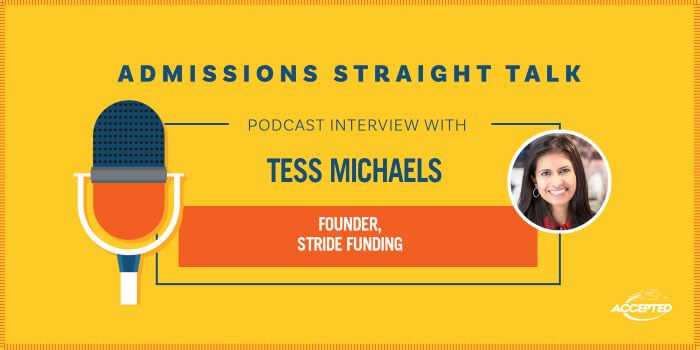
Find out how you can benefit from Stride Funding [Show Summary] Tess Michaels shares what’s new at Stride Funding, the innovative educational financing company she founded, and reflects on the impact that her Harvard Business School MBA has had on her impressive success today. Interview with Tess Michaels, Founder and CEO of Stride Funding [Show…
8 Tips for Writing a Memorable MBA Interview Thank You Letter
You’ve finally finished your b-school interview and are thankful to cross this experience off your application to-do list. However, as you wait to receive your acceptance letter, it’s appropriate to also send thank you notes to all of the people who helped you during the day. Gratitude is key A thank you email follows a…
Full Scholarships Based on Financial Need Now Available at HBS
Harvard Business School is now offering full scholarships based on financial need for approximately 10% of its MBA candidates, according to an August 16 article in the Wall Street Journal. The article also quoted Accepted founder and CEO Linda Abraham, who noted that scholarships covering the entire cost of tuition and fees for the neediest…
What Does It Take to Get Into Harvard, Stanford, and Wharton?

Are you the Harvard, Stanford, or Wharton “type?” Each year, Harvard, Stanford, and Wharton are flooded with applicants who have great experience and powerful stats. However, most are not the applicants these programs are looking for. If these elite programs are on your radar, you need to know if you will be considered a viable…
U.S. News MBA Rankings 2023 [Full-Time & Part-Time]
Chicago Booth and Wharton (University of Pennsylvania) share the #1 spotlight in U.S. News’ Best Business Schools of 2023 rankings, released March 29. The metrics for the rankings are based on career placement success, student excellence and qualitative assessments by experts. MBA rankings are studied voraciously by applicants, students, and alumni but remain controversial. Notable changes…
Financial Times Ranks Wharton as #1 in 2022 Rankings

The Financial Times has released its global rankings of the best MBA programs and has considerably shuffled the deck. Several top-ranked programs fell several notches, while others rose considerably. For the first time since 2011, Wharton has returned to its status as #1 in FT’s list. Other programs that made giant strides in the rankings…
MBA Students Pay Off Student Loans Faster Than Other Grad Degrees

Most grad students take out student loans to finance their higher education and can end up saddled with debt running into hundreds of thousands of dollars by the time they graduate. According to a Wall Street Journal analysis of federal student loan data for nearly 600 programs, graduates of approximately 98% of universities that offer…
Applying to HBS? Watch this Video First!

In our recent masterclass, Get Accepted to Harvard Business School, we shared must-have information about how to approach the elements of the HBS application in a way that will maximize your chances of acceptance. If you couldn’t join us, make sure you watch the recording of the session before you even consider getting started on…
What Harvard Business School Is Looking For: Engaged Community Citizenship
This is the third post in our series, What HBS is Looking For. This is not about “community service” — it’s not about doing halo-worthy things in your free time. (Though neither Harvard Business School nor I will discourage that, and “engaged community citizenship” and “community service” certainly can overlap.) Community service is an activity…
What Harvard Business School Is Looking For: Analytical Aptitude and Appetite
This is the second post in our series, What HBS is Looking For. So, HBS wants “analytical aptitude and appetite.” Hardly a surprise. You might be tempted to simply skim that section of the website message without giving it much thought. Maybe it’s not as obvious as it sounds. Let’s break it down. Understanding the…
An MBA Success Story Reflects on His HBS Experience, 7 Years Later [Episode 419]
How can an MBA degree help an entrepreneur? [Show summary] Entrepreneur and Harvard Business School grad Ben Faw reflects on the value of his MBA and the role it played in his successful career. Why this serial entrepreneur feels his time at HBS was invaluable [Show notes] What happens to Harvard Business School MBAs after…
What Harvard Business School Is Looking For: The Habit of Leadership
Thank you, Harvard Business School. That’s what applicants should think when they visit the program’s website and find “habit of leadership” on its “Who are we looking for?” admissions page. It’s common knowledge that HBS values leadership, but with this phrase, the adcom succinctly expresses how they view leadership – dynamic, deep, intrinsic, long-term. It’s…
- 1
- 2
- 3
- 4
- Next Page »